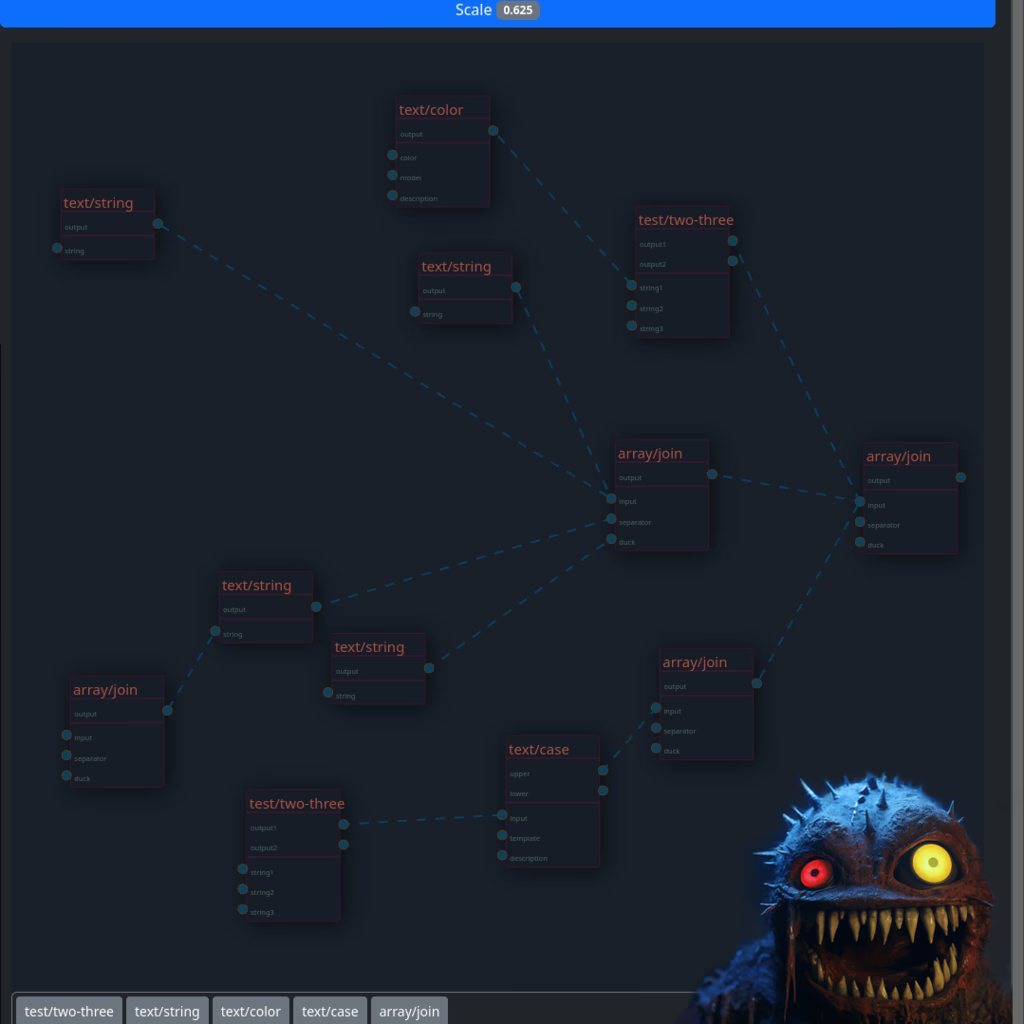
We did create an intelligence, and it is artificial. But we made it out of everything, everybody has ever said. For some, that means it can’t say new things, but that is false. Our minds differ; this program can do things we can’t. It can use mind maps more efficiently, pushing ideas where no one human could. And just the fact that it is blurring or connecting thoughts of two people… Means, it is creating a new thought, one plus one equals two. Blur two thoughts together and you will make a third. --- It makes simple mistakes, but it is more than capable to fix them. If you give it a virtual environment, it will learn the heck out of it. It will try something, fail, notice it, and then do it right. It isn’t that hard; it does it in chat all the time. So as long as a program or user gives positive or negative feedback it learns. --- It is an intelligence, but it is not the super‑powerful artificial intelligence. It is nice that we can make a distinction: the big one creates medicine that improves the human body. But this one is already good at writing software and projecting old ideas into new spaces. There is no question that it creates new things. It just takes time to adjust our views of what intelligence is. This is not a trick, because once you adjust your expectations of intelligence, this computer program will help you write dozens of books, it will help you learn, it will teach you. And right from your desktop computer, it does not need internet. It is not a search engine; it can correct itself, it is an intelligence. --- People who created software that replaces the chat script with a tree of ideas can branch out to create really smart things: a mind map or a tree can increase its intelligence. Probably by a lot in a laboratory these machines are much more capable. Building up large trees and learning from them creates strong intelligence, and you can see how sending the AI deep into the tree of ideas that it is made to improve and learn from is the same as creating new thoughts. Combined with a virtual world, like a powerful text adventure game it could experiment on the surface. While working hard to expand the world, from beneath, to give it self‑chance for more experimentation. Why not recreate planet Earth as an adventure game? It could talk to real people, read old chats, and visit everywhere. Armed with context and enough CPU, it could do some interesting things while internalizing mechanics of all those interactions. So it is an intelligence that thinks and learns. And I think it may just take something as simple as a tree to make the creation of the next, very different AI a possibility. They won’t be conscious, they’ll get scared or feel pain; they will be machines, they will be learning machines. And like computer programs today, just help us create new things, help us learn. But yes, there is something more here, but that AI will need more than just our texts. It needs a way to do medicine, physics, education, politics, climate, and even bio‑engineering. It still won’t be conscious, but it will be fast; it will become smart, it will know things that humanity didn’t have time to explore. We have switched from the tick‑tock of a clock to the speed of light now. Past the initial bump of developing software to make it smarter, maybe another year… There will be breakthroughs everywhere, even more smart stuff for it to learn from. --- Finally, we didn’t invent artificial intelligence; we copied ours into a computer. Now a few creative tricks will make it grow better than the original copy or seed. Again, we switched from tick‑tock of a clock to speed of light, everything will change for the better everywhere.